
Introduction
Navigating the intricate landscape of influencer pricing can be daunting for brands aiming to maximize marketing effectiveness. As social media evolves, so do the methods of compensating influencers, with many businesses now facing a complex web of costs influenced by engagement rates, audience demographics, and content type.
As performance-based pricing models gain traction, how can brands invest wisely while fostering genuine partnerships that yield tangible results?
Let’s explore the key factors and models of influencer pricing to empower brands in making informed decisions in this dynamic market.
Define Influencer Pricing: Core Concepts and Terminology
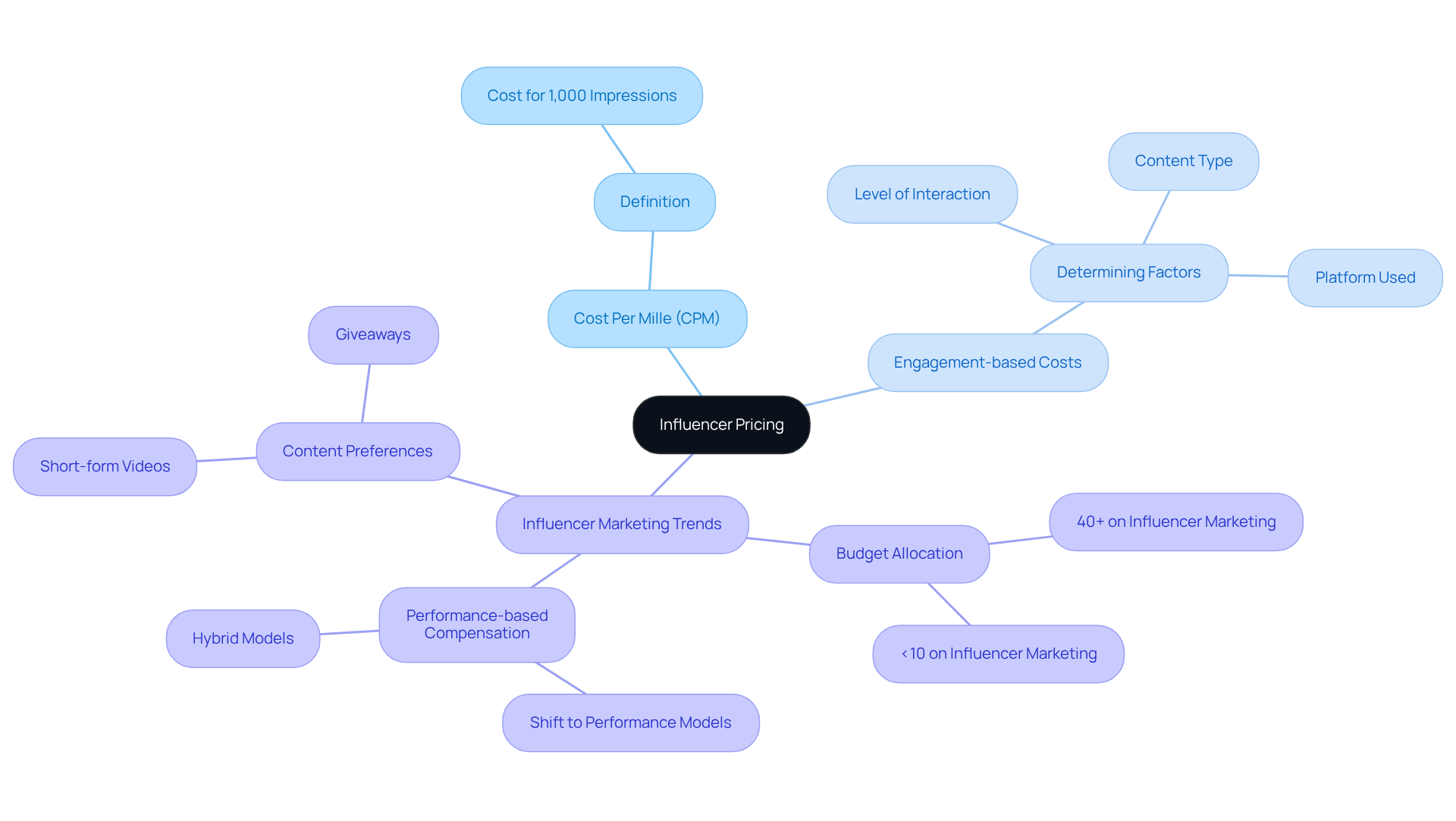
Understanding influencer pricing is essential for businesses looking to maximize their marketing budgets and achieve impactful results. These costs vary significantly based on factors like follower count, engagement rate, content type, and the platform used. Key concepts include:
- Cost Per Mille (CPM), which represents the cost for 1,000 impressions.
- Engagement-based costs, which tie expenses to the level of interaction a creator's content receives.
Navigating the complexities of influencer marketing can be daunting for many businesses. To thrive in the competitive landscape of influencer marketing, companies must not only understand these costs but also strategically leverage them for maximum impact.
Explore the Evolution of Influencer Pricing: Historical Context and Current Trends
The landscape of social media star compensation has transformed dramatically, leaving many companies grappling with new dynamics. Initially, collaborations were often informal, relying on barter systems where products were exchanged for promotional posts. As social media platforms grew, companies began to recognize the significant worth that influencers offer, which led to the development of influencer pricing structures by the mid-2010s. Currently, the costs associated with social media personalities are heavily influenced by data analysis. Brands now utilize metrics such as engagement rates and audience demographics to determine fair compensation.
Current trends indicate a significant shift towards performance-based pricing models, where influencers are compensated based on measurable outcomes like conversions or sales. This evolution mirrors a wider industry trend towards accountability and efficiency in promotion by social media personalities. For instance, 73% of companies are now adopting performance-based compensation, highlighting the growing emphasis on results-driven partnerships.
Furthermore, with the social media marketing sector projected to reach $32.6 billion by 2026, how well do you understand these cost dynamics? It's crucial for companies aiming to enhance their marketing budgets. Influencers are increasingly seen as business partners, with many treating their channels like professional media companies, focusing on analytics and revenue generation through affiliate partnerships. This shift boosts the value of influencer partnerships and aligns their incentives with company outcomes, creating long-term relationships that drive sustainable growth.

Identify Key Factors Influencing Influencer Pricing: Engagement, Platforms, and More
Understanding influencer pricing is crucial for brands aiming to maximize their marketing impact. Several critical factors influence influencer pricing, including:
- Engagement rates
- Audience size
- Content quality
- The platform
Engagement rate is a crucial factor. Influencers with highly engaged audiences command significantly higher fees, as their followers are more likely to trust and act on their recommendations. Have you considered how nano-influencers, with engagement rates of 4-8%, charge between $25 and $200 per post? This makes them a cost-effective option for brands focused on authentic connections. Significantly, 94% of marketers consider social media personalities an effective approach, and 86% of consumers have made a purchase driven by these individuals in the past year. This emphasizes the importance of comprehending influencer pricing strategies in this expanding area.
The platform also plays a vital role in influencer pricing dynamics. Instagram influencers, known for their conversion capabilities, may charge differently than those on TikTok or YouTube, where content formats and audience interactions vary. For instance, TikTok is especially effective for brand awareness initiatives, yielding an average short-term ROI of 11.8%, which can justify increased payment for content creators.
Other influencing factors include:
- The individual's niche
- The complexity of the content required
- Any additional rights or exclusivity agreements negotiated
Brands that effectively utilize engagement rates can enhance their collaborations with creators by ensuring that influencer pricing aligns with the true value provided by them. This strategy not only boosts campaign performance but also helps build lasting relationships with influencers, ultimately driving better outcomes for promotional initiatives. Moreover, the influencer marketing sector is expected to surpass $33 billion worldwide by 2025, emphasizing the increasing importance of these financial dynamics. As the influencer marketing landscape evolves, brands must adapt their strategies to ensure they are not left behind in this competitive arena.

Analyze Influencer Pricing Models: CPM, Engagement-Based, and Rate Cards
Understanding influencer pricing is crucial for brands aiming to optimize their marketing strategies. Influencer pricing includes various models, such as:
- Cost Per Mille (CPM)
- Engagement-based pricing
- Rate cards
CPM is a traditional method where companies compensate influencers based on every 1,000 impressions their content receives. This model is especially beneficial for companies aiming to maximize reach and visibility. In contrast, engagement-based costs connect compensation to the level of audience interaction, rewarding influencers for likes, shares, and comments, thus aligning payment with performance metrics. Rate cards function as vital instruments, outlining influencer pricing for various content types and partnerships, improving clarity for companies.
Each pricing model, such as influencer pricing, offers distinct advantages tailored to specific campaign goals, making it essential for companies to identify which model aligns best with their marketing objectives. Brands struggle to maintain audience engagement as content becomes repetitive. Without innovation, brands risk losing audience interest and engagement. Therefore, integrating structured testing and performance feedback loops is essential for maximizing campaign performance and tackling rising CPAs in digital advertising.

Conclusion
Navigating the complexities of influencer pricing is a challenge that many brands face today. How influencers are compensated is intricate, influenced by factors like engagement rates, audience size, and the platforms used. These elements play a crucial role in the success of marketing campaigns. Are you ready to leverage these dynamics? Understanding them allows businesses to maximize their marketing budgets and achieve impactful results.
The article delves into the evolution of influencer pricing, highlighting the shift from informal barter systems to data-driven compensation models. Key insights include:
- The importance of engagement rates
- The growing trend towards performance-based pricing, which aligns influencer incentives with measurable outcomes
Additionally, different pricing models, such as Cost Per Mille (CPM) and engagement-based costs, are explored, providing a comprehensive understanding of how brands can optimize their strategies.
With the influencer marketing landscape constantly evolving, how can brands stay informed about these pricing dynamics? The anticipated growth of the sector underscores the necessity for businesses to adapt their approaches, ensuring they invest wisely in influencer partnerships. Investing in understanding influencer pricing could be the key to securing a competitive edge in a rapidly evolving landscape.
Frequently Asked Questions
What is influencer pricing?
Influencer pricing refers to the costs associated with engaging influencers for marketing purposes, which can vary based on factors like follower count, engagement rate, content type, and the platform used.
What is Cost Per Mille (CPM)?
Cost Per Mille (CPM) is a pricing model that represents the cost for 1,000 impressions of an influencer's content.
What are engagement-based costs?
Engagement-based costs are expenses tied to the level of interaction that a creator's content receives, meaning businesses pay based on how much engagement (likes, comments, shares) the content generates.
Why is understanding influencer pricing important for businesses?
Understanding influencer pricing is essential for businesses to maximize their marketing budgets and achieve impactful results in their influencer marketing campaigns.
How can businesses effectively navigate influencer marketing?
Businesses can thrive in influencer marketing by understanding the various costs associated with it and strategically leveraging these costs for maximum impact.
List of Sources
- Define Influencer Pricing: Core Concepts and Terminology
- 32 influencer marketing statistics to guide your brand’s strategy in 2026 (https://sproutsocial.com/insights/influencer-marketing-statistics)
- Influencer Pricing: What Influencer Marketing Costs in 2026 (https://modash.io/blog/influencer-pricing)
- How Influencer Marketing Is Changing in 2026 (https://vogue.com/article/how-influencer-marketing-is-changing-in-2026)
- Influencer Pricing: The Cost of Influencers in 2026 - Shopify (https://shopify.com/blog/influencer-pricing)
- Influencer Marketing Pricing in 2026: Real Rates Per Asset (https://socialnative.com/articles/influencer-marketing-pricing-2026)
- Explore the Evolution of Influencer Pricing: Historical Context and Current Trends
- Influencer Pricing: The Cost of Influencers in 2026 - Shopify (https://shopify.com/blog/influencer-pricing)
- Influencer Marketing Trends 2026: Performance Insights (https://impact.com/influencer/influencer-marketing-trends-performance)
- toprankmarketing.com (https://toprankmarketing.com/blog/15-wise-b2b-influencer-marketing-quotes)
- Influencer Marketing Statistics 2026: 150+ Data Points (https://digitalapplied.com/blog/influencer-marketing-statistics-2026-data-points)
- medium.com (https://medium.com/@ara_ohanian/99-inspiring-influencer-marketing-quotes-54db4b924341)
- Identify Key Factors Influencing Influencer Pricing: Engagement, Platforms, and More
- Influencer Marketing Statistics for 2026: The Numbers That Matter (https://influee.co/blog/influencer-marketing-statistics)
- Influencer rates: How to maximize your budget in 2026 (https://blog.hootsuite.com/influencer-pricing)
- influenceflow.io (https://influenceflow.io/resources/influencer-pricing-strategy-the-complete-2026-guide-for-brands-creators)
- Influencer Pricing: The Cost of Influencers in 2026 - Shopify (https://shopify.com/blog/influencer-pricing)
- Influencer Rates 2026: What to Pay and Charge by Platform & Tier (https://stan.store/blog/influencer-rates)
- Analyze Influencer Pricing Models: CPM, Engagement-Based, and Rate Cards
- Influencer rate cards: How much do influencers cost? (https://bazaarvoice.com/blog/influencer-rate-card-how-much-do-influencers-cost)
- grin.co (https://grin.co/blog/incredible-influencer-marketing-case-studies)
- Top Influencer Marketing Statistics for 2026 (https://aspire.io/blog/10-influencer-marketing-stats)
- modash.io (https://modash.io/blog/influencer-marketing-case-studies)
- Influencer Rates 2026: What to Pay & What to Charge (Nano to Mega) (https://afluencer.com/influencer-rates)